Donald Trump's Health Concerns: From Rash to "Preventive" Creams
The health of a sitting or prospective U.S. President is perennially a subject of intense public interest and speculation. Every visible change, every official statement, is scrutinized, often fueling debates about fitness for office. In recent times, Donald Trump's health has once again become a prominent topic, notably due to a visible rash on his neck and the subsequent explanation from the White House regarding a "preventive treatment." This incident, coupled with earlier concerns like recurring hand bruises, highlights the unique challenges of transparency and privacy faced by figures in such high-stakes public roles.
Unpacking the "Preventive Treatment" Explanation
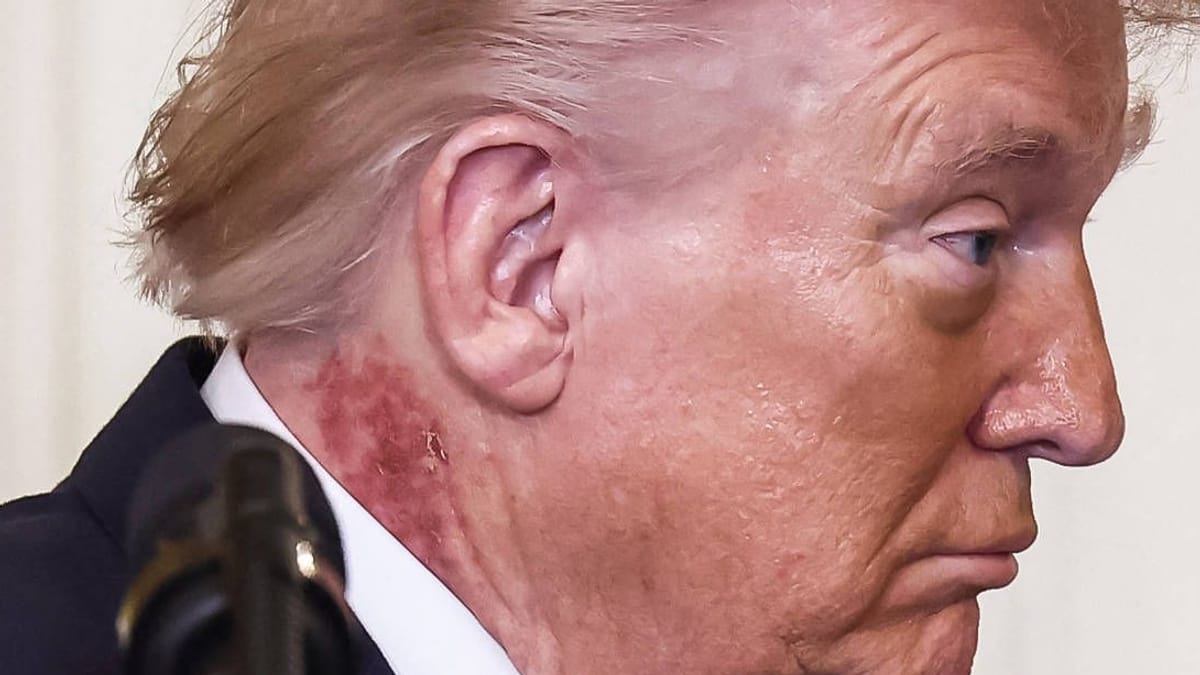
Photographs taken during a White House event stirred considerable public discussion after they revealed a noticeable reddish area with what appeared to be brownish crusts on the right side of Donald Trump's neck, extending from near his ear towards the back of his head. The immediate visual evidence led to widespread conjecture regarding the former president's health status, especially given his age and the rigorous demands of presidential campaigning.
In response to the burgeoning speculation, the White House promptly issued a statement through Trump's personal physician, Dr. Sean Barbabella. The explanation centered on a "preventive skin treatment," with Dr. Barbabella stating that President Trump was using "a very common cream on the right side of his neck, which is a preventive skin treatment and was prescribed by the White House physician." He further clarified that Trump had been applying the cream for approximately a week and that the associated redness was expected to persist for several more weeks. This official explanation, specifically referencing a "preventive skin treatment," served to address immediate concerns, though it also left some questions unanswered about the specific nature of the condition necessitating such an intervention. For a deeper dive into the specific details surrounding this incident, you can read more about
Trump's Neck Rash Explained: The "Preventive Treatment" Story. The term "vorbeugende behandlung trump," meaning "preventive treatment trump," became central to the discourse, emphasizing the proactive nature of the medical care described.
The use of "preventive" in the context of skin treatment often implies addressing issues before they become more serious. This could range from managing sun damage (like actinic keratosis, which are precancerous growths) to treating common dermatological conditions that benefit from early intervention. Without specific details from the physician, the exact nature of the "preventive treatment" remains open to interpretation, yet the emphasis on prevention underscores a proactive approach to managing the health of a public figure. More details on the official response can be found in this article:
Trump's "Preventive Skin Treatment": White House Addresses Neck Rash.
Beyond the Rash: A History of Health Speculation
The neck rash incident is not an isolated event in the narrative of public scrutiny surrounding Donald Trump's health. Over the past months, and indeed years, various observations have fueled public discussion. One recurring topic has been the appearance of bruises or discolored spots on his hands. Photographs frequently captured these marks, particularly on his right hand, leading to renewed waves of speculation.
The White House and Trump himself have previously offered explanations for these hand bruises. One common reason cited was the frequent handshaking characteristic of his public life, especially during campaigns and official duties. Another significant explanation pointed to his daily intake of aspirin. While aspirin is often recommended for cardiovascular prevention, particularly for individuals at a certain age or with specific risk factors, it is also known to thin the blood, making an individual more prone to bruising. Trump himself has acknowledged taking aspirin, even suggesting at one point that his dosage might be higher than what his doctors typically recommended as part of a "standard program zur kardiovaskulären Prävention" (cardiovascular prevention program). This combination of physical activity and medication can indeed contribute to the increased visibility of bruises, especially on an older individual's skin which tends to be thinner and more fragile.
Donald Trump, who will turn 80 in June, holds the distinction of being the oldest president to be sworn into office in U.S. history at the time of his inauguration for his first term. He has consistently maintained that he is in "excellent health," often contrasting his vigor with that of his political opponents. However, the advanced age of any presidential candidate or incumbent naturally brings with it heightened public and media interest in their physical and cognitive well-being. This scrutiny is a reflection of the immense responsibilities associated with the presidency, where sustained health and stamina are paramount.
The Broader Context of Presidential Health and Public Scrutiny
The public's fascination with a president's health is not merely idle curiosity; it stems from a legitimate concern about the leader's capacity to perform the demanding duties of the office. The President of the United States holds immense power and influence, both domestically and internationally. Any question regarding their physical or mental fitness can have far-reaching implications for national security, economic stability, and global diplomacy.
In this context, the role of the White House physician is crucial yet delicate. They are tasked with providing medical care while also acting as the primary conduit for public information about the president's health. This involves a careful balancing act: ensuring transparency to satisfy public demand while also respecting the president's right to medical privacy. Official statements, like those concerning Trump's neck rash and
the "preventive treatment" story, aim to reassure the public without divulging overly sensitive personal medical details.
When public figures, particularly those in high office, exhibit visible health indicators, it often triggers broader discussions. For instance, the mention of "preventive skin treatment" for a man of Trump's age naturally brings to mind common dermatological concerns associated with aging and sun exposure. Conditions like actinic keratosis (pre-cancerous lesions from sun damage), seborrheic keratosis (benign skin growths), or even simple dermatitis can necessitate such treatments. While it's imperative not to speculate on any specific individual's diagnosis, understanding the general spectrum of conditions that might require such interventions helps contextualize official statements. The constant travel, stress, and irregular schedules inherent in presidential life can also exacerbate existing conditions or contribute to new ones, making comprehensive and *vorbeugende behandlung trump* (preventive treatment for Trump) a constant consideration.
Navigating Public Health Information in the Digital Age
In today's hyper-connected world, information—and sometimes misinformation—travels at lightning speed. A single photograph or a brief official statement can quickly become a global talking point, amplified across social media platforms and traditional news outlets. This digital landscape significantly alters how public figures' health concerns are perceived and discussed.
The visual evidence of a rash or bruises can immediately spark countless theories and analyses, often by non-medical professionals. This rapid dissemination of information underscores the importance of clear, timely, and credible official statements from sources like the White House physician. However, even official explanations are subject to scrutiny, especially when they lack granular detail, as was the case with the generic "preventive skin treatment" given for Trump's neck rash.
For the public, navigating this torrent of information requires a critical approach. Here are some tips for evaluating health-related news about public figures:
* **Prioritize Official Sources:** Always look for statements directly from the individual's medical team or official spokespeople.
* **Beware of Speculation:** Be wary of sensational headlines or analyses from individuals lacking medical credentials or direct knowledge of the patient.
* **Consider the Context:** Understand that public figures operate under immense pressure, and explanations for health issues might be simplified for public consumption.
* **Focus on Impact, Not Intrusiveness:** While public health is important, avoid engaging in overly intrusive speculation about private medical details that don't directly impact fitness for office.
Conclusion
Donald Trump's recent neck rash and the White House's explanation of a "preventive treatment" have once again brought his health into the public spotlight. This incident, alongside previous discussions regarding hand bruises and the broader context of his age, underscores the ongoing fascination and legitimate public concern surrounding presidential health. The detailed explanations, whether for a "preventive skin treatment" or the effects of aspirin, serve to address these concerns, even if they sometimes leave room for further questions. Ultimately, the intense scrutiny faced by public figures like Trump highlights the delicate balance between a leader's right to privacy and the public's need for assurance regarding their highest officeholder's capacity and well-being.